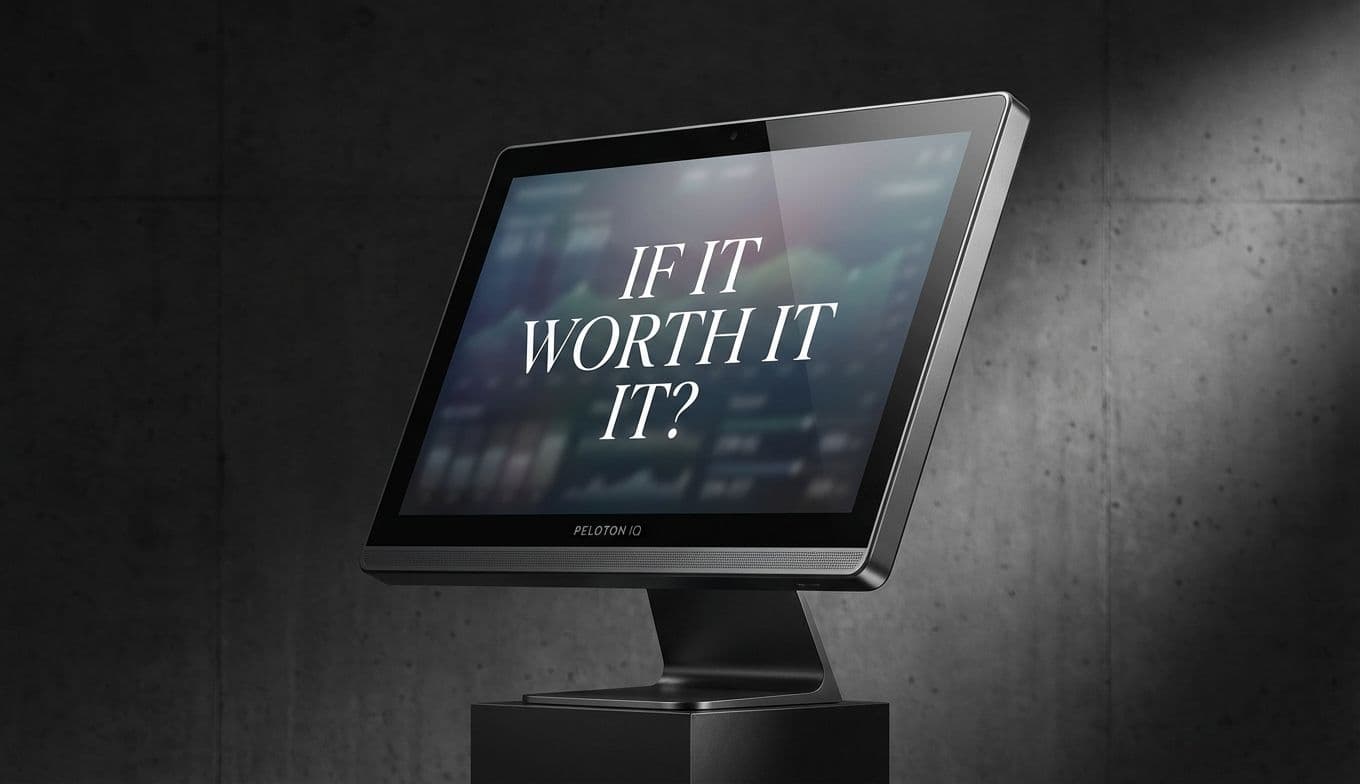
Peloton IQ Review: AI Coaching Features & Is It Worth It?

Team Gimmie

Team Gimmie

2/2/2026

Peloton IQ Review: AI Coaching Features & Is It Worth It?

The AI Revolution in Your Living Room: Is Peloton IQ the Coach You Actually Need?

AI is officially everywhere. It is in our phones, our cars, and now, it is staring at us from the top of our television screens while we sweat. Peloton, a brand that practically defined the home fitness boom, has stepped into the artificial intelligence arena with Peloton IQ. It is a movement-tracking camera system designed to act as a digital set of eyes, providing real-time feedback on your form.

But let’s be honest: the fitness world is notorious for expensive gimmicks that end up gathering dust in the corner of the bedroom. I spent significant time testing the Peloton IQ—specifically the camera tech integrated into the Cross Training Bike Plus and the standalone Guide—to see if this is a genuine breakthrough or just a high-tech mirror. Does it actually help you make gains, or is it just another subscription fee?

The Virtual Coach: How It Actually Feels

The core experience of Peloton IQ centers on something called "Movement Tracker." When you start a strength or rowing workout, the camera maps your body using a series of points on your joints. You see yourself in a "Self-Center" window right next to the instructor.

In practice, this is a game-changer for those of us prone to "ego lifting." During a set of overhead presses, I noticed my lower back starting to arch—a common mistake that leads to injury. Before I could even register the fatigue, the system’s interface signaled a correction. It isn't just a generic "keep going" message; it is a visual cues that help you align your body with the instructor’s demo.

When you are deep into a set of squats and your knees begin to cave inward, the IQ system flags the instability. For someone training alone in a basement or a spare bedroom, that immediate, objective feedback is the difference between a productive session and a week spent on the couch with a pulled muscle. It bridges the gap between the isolation of home workouts and the accountability of a boutique fitness class.

Where the AI Succeeds and Where It Stumbles

After dozens of reps, it became clear where this technology shines. It is exceptionally good at counting reps and tracking "time under tension." If you try to cheat a rep by not going low enough on a lunge, the tracker simply won't count it. This forced me to stay honest in a way that a standard video workout never could.

However, the AI isn’t perfect. While it is great at detecting major form breakdowns—like the aforementioned knee-buckling or a rounded back during a deadlift—it can struggle with more subtle nuances. For example, it might not always catch if your grip is slightly too wide or if you are failing to engage your lats during a row.

There is also the "environmental" factor. If you are wearing baggy clothes or working out in a dimly lit room, the camera's precision drops. It needs a clear silhouette to work its magic. It is a powerful tool, but it doesn't have the "intuition" of a human coach who can see the look of pain or hesitation on your face and tell you to drop the weight. It is a data-driven assistant, not a mind reader.

The Financial Reality: Counting the Cost

One thing that often gets lost in the marketing hype is the actual cost of entry. Peloton IQ isn't a one-time purchase. To get the movement tracking on the Cross Training Bike Plus, you are looking at an initial investment of roughly $2,500. If you opt for the standalone Peloton Guide camera, the hardware is more affordable—often retailing around $195—but the real cost is the "rent."

To keep the AI features active, you need a Peloton All-Access Membership, which currently runs about $44 per month. If you already have the bike, you are likely paying this anyway. But if you are coming from a different ecosystem, that monthly recurring cost is something you have to weigh against the price of an actual personal trainer. At roughly $528 a year for the subscription alone, you have to be committed to using those AI features daily to see a return on your investment.

The Gimmie Guide: Who Should Buy and Who Should Skip

Is this the right gift for the fitness lover in your life? Here is the quick breakdown to help you decide.

Who Should Buy:

  • The Data Junkie: If they love tracking every calorie, rep, and heart rate spike, they will find the IQ’s post-workout metrics addictive.
  • The Home Workout Novice: For someone who is intimidated by the gym and worried about doing exercises "wrong," the real-time form correction provides a much-needed safety net.
  • The "Cheater": We all know someone (maybe it is us) who cuts their sets short. The rep-counting feature is the ultimate accountability partner.

Who Should Skip:

  • The Advanced Lifter: If they already have a decade of experience and perfect form, the AI’s corrections might feel redundant or even distracting.
  • The Privacy Minimalist: If the idea of an AI-powered camera in the living room feels a bit too "Big Brother," they won’t enjoy the experience.
  • The Budget Conscious: If the $44 monthly subscription feels like a burden, there are plenty of analog ways to check form (like a $20 floor mirror).

Final Verdict: Are the Gains Real?

Peloton IQ represents a significant step forward in the democratization of coaching. It isn't a total replacement for a human professional, but it is a massive upgrade over watching a static YouTube video. By catching form errors in the moment and forcing rep consistency, it fundamentally changes how you interact with a screen.

If you are a dedicated Peloton user, the IQ features are a no-brainer upgrade that will almost certainly lead to better results through better consistency. If you are starting from scratch, the entry price is steep, but the "gains" are real—not because the AI is magic, but because it makes you more mindful of every single movement. It turns a passive workout into an active, corrected, and safer experience. Just make sure you are ready to commit to the subscription before you bring the "coach" home.

#Peloton Guide features#AI home fitness coach#Peloton movement tracker#Peloton All-Access Membership cost#smart home gym equipment