Microplastics in the Kitchen: 7 Hidden Sources & Safe Swaps
 Team Gimmie
The Invisible Ingredient: 7 Kitchen Staples Leaking Microplastics Into Your Meals
I’ve spent the better part of a decade testing every kitchen gadget that hits the market. I’ve seen the rise of the air fryer, the fall of the over-engineered garlic press, and the strange persistence of the banana slicer. But lately, my focus has shifted from what these tools can do to what they’re leaving behind. We’ve spent years worrying about what’s in our food—pesticides, hormones, additives—but we’ve spent very little time looking at the tools we use to prepare it.
It turns out your kitchen might be a stealth source of microplastics. We aren’t just talking about a stray bottle of water anymore. Recent research from organizations like Consumer Reports has found that plastic chemicals like phthalates are present in 99% of supermarket foods tested, and much of that contamination happens during processing and preparation. When you combine heat, sharp knives, and aging plastic, you’re creating a recipe for ingestion that most of us never signed up for.
Before you buy your next set of "bargain" containers or gift a plastic-heavy starter kit to a friend, let’s look at the seven most common culprits hiding in plain sight.
The 7 Sneaky Sources of Microplastics in Your Kitchen
-
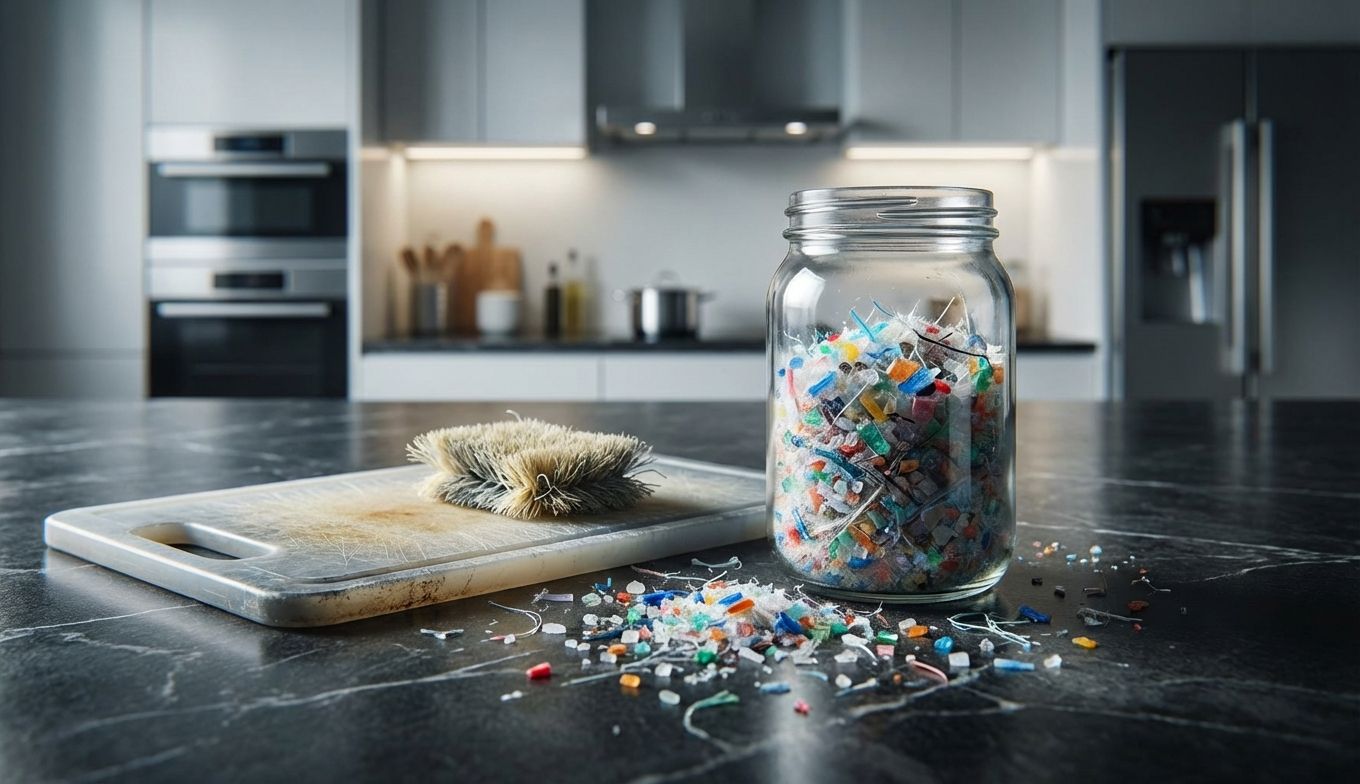
Plastic Cutting Boards This is the big one. Every time you slice an onion or dice a tomato on a plastic board, the knife leaves a groove. Those grooves aren't just aesthetic; they represent plastic that has been displaced. A study published in Environmental Science & Technology suggested that using a plastic cutting board could result in the ingestion of 7 to 50 grams of microplastics a year. That’s roughly the weight of ten plastic credit cards. If your board looks "fuzzy" or heavily scored, it’s shedding.
-
To-Go Coffee Lids We often remember the stainless steel travel mug but forget the lid. Most coffee cup lids are made of polypropylene (plastic #5). When hit with 190-degree liquid and acidic coffee, these lids can release microplastic particles directly into your drink as you sip. Over time, the heat weakens the plastic, making it more prone to shedding.
-
Plastic Tea Bags It’s a cruel irony: you think you’re doing something healthy by brewing a cup of tea, but many premium "silken" tea bags are actually made of plastic (PET or nylon). Research has shown that a single plastic tea bag at brewing temperature can release approximately 11.6 billion microplastics and 3.1 billion nanoplastics into a single cup. Stick to loose-leaf tea or verified paper bags.
-
Nylon and Plastic Spatulas Have you ever noticed the edge of your plastic spatula looks a little melted or frayed? That plastic didn’t just vanish; it likely bonded with your scrambled eggs. High-heat cooking with plastic utensils is one of the fastest ways to introduce degraded polymers into your diet.
-
Scratched Non-Stick Pans While technically a coating and not a "plastic" in the traditional sense, the PTFE (Teflon) used in non-stick pans is a fluoropolymer. When these pans get scratched by metal utensils or start to flake due to age, they release "forever chemicals" and micro-fragments into your food.
-
Plastic Food Storage Containers We’ve all seen that one container in the back of the cupboard—the one that’s turned orange from tomato sauce and looks slightly cloudy. That cloudiness is a sign of plastic degradation. When you microwave food in these containers, the combination of heat and fats causes the plastic to break down faster, leaching chemicals and particles directly into your leftovers.
-
Plastic Ice Cube Trays These are often overlooked because they stay in the freezer. However, the constant "twist and crack" motion used to release the ice creates structural stress. Over time, tiny fragments of brittle plastic can snap off and end up in your drink. If your trays feel stiff or have a white, chalky residue, they’re past their prime.
The Real Cost of the "Cheap" Kitchen
Now, I’m not here to be an alarmist. We’re still in the early stages of understanding how these particles affect our long-term health. But the scientific consensus is leaning toward a simple truth: less plastic is better. Beyond the health implications, there is a significant financial argument for making the switch.
Consider the lifecycle of a product. A $10 set of plastic containers will warp, stain, and need replacing within eighteen months. A $40 set of tempered glass containers will last a decade or more.
(Comparison Table Idea: Place a table here titled Plastic vs. Glass: The Real Cost Over 5 Years. Compare the replacement frequency and cumulative cost of plastic cutting boards and containers versus a single purchase of wood and glass alternatives. The data usually shows that the "expensive" sustainable option pays for itself by year three.)
The Gift of a Healthier Kitchen
If you’re looking for a housewarming gift or a wedding present, moving away from plastic isn't just a trend—it's an act of care. Instead of a generic plastic gadget, consider these curated "Safe Kitchen" bundles that prioritize longevity and health.
The Sustainable Baker Set Instead of plastic mixing bowls and nylon whisks, go for a professional-grade kit.
- Stainless steel nesting bowls with silicone bases.
- High-grade silicone baking mats (to replace parchment paper and greasing).
- A solid wood rolling pin and stainless steel measuring cups.
The Hydration Hero Kit Help someone kick the bottled water and plastic lid habit.
- A vacuum-insulated stainless steel bottle (like a Hydro Flask or Yeti).
- A glass or ceramic travel mug with a silicone-lined lid.
- A set of stainless steel or glass straws.
The Plastic-Free Starter Kit This is the ultimate gift for someone moving into a new home.
- Two high-quality wood or bamboo cutting boards (which have natural antimicrobial properties).
- A 10-piece set of glass food storage containers (Pyrex or Glasslock).
- A set of stainless steel kitchen utensils.
The Shift to Intentional Living
We’ve become a culture of the "disposable." We buy things because they’re cheap and easy, but we don't often account for the invisible costs—to our wallets, our health, and the environment. Rethinking your kitchen isn't about throwing everything away today; it’s about making better choices as things need replacing.
Next time you’re at the store, look for glass, stainless steel, wood, and high-quality silicone. These materials don't just look better on your counter; they provide a peace of mind that no plastic gadget can match. It’s time to move beyond the hype of the newest "must-have" tool and get back to the basics of quality, safety, and durability. Your morning coffee—and your health—will thank you for it.
