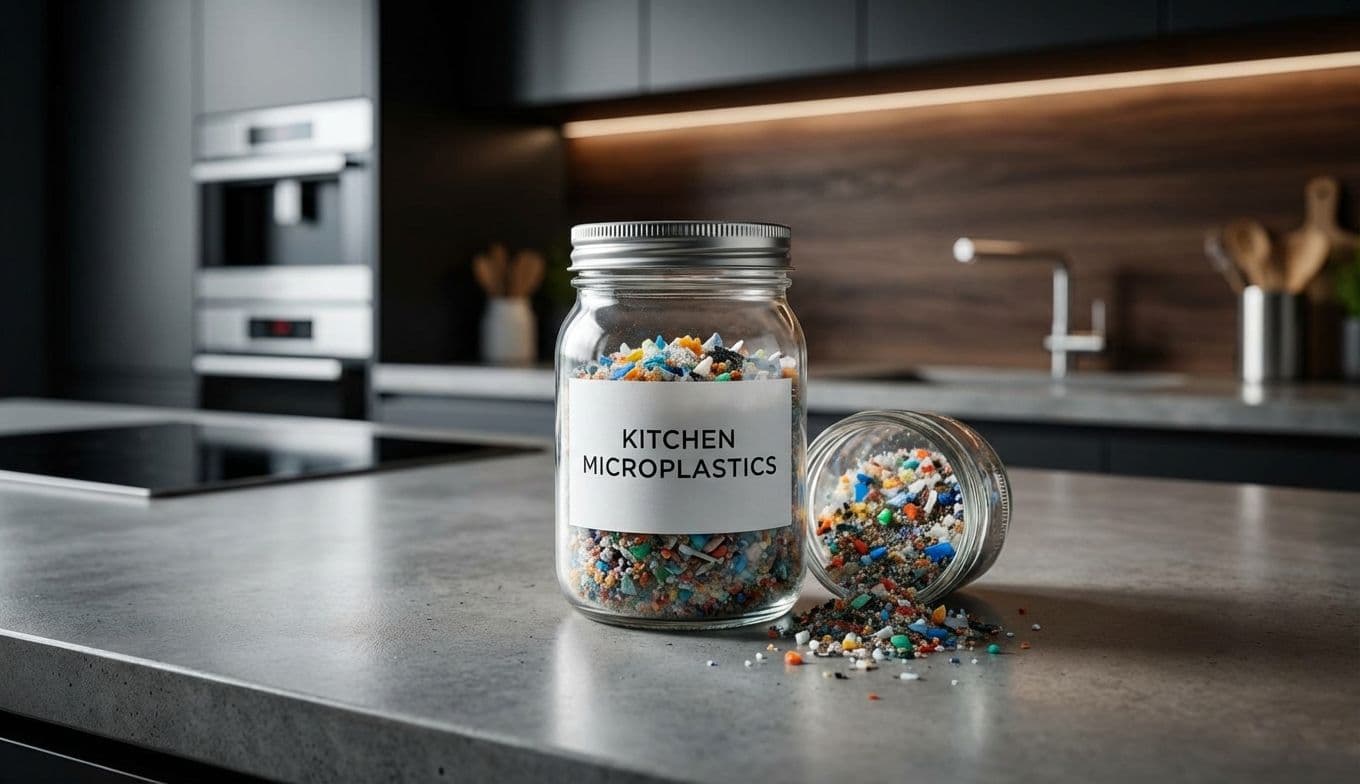
Microplastics in Kitchen: 7 Hidden Sources & Safe Swaps

Team Gimmie

Team Gimmie

2/2/2026

Microplastics in Kitchen: 7 Hidden Sources & Safe Swaps

THE HIDDEN GUESTS AT YOUR DINNER TABLE: 7 KITCHEN STAPLES SHEDDING MICROPLASTICS

I have spent the better part of a decade inside professional test kitchens, surrounded by the hum of high-end smart ovens and the relentless clicking of digital thermometers. Usually, my job is to tell you which air fryer yields the crispest wings or which blender can liquefy a kale stem without breaking a sweat. But lately, my focus has shifted from how these tools perform to what they might be leaving behind.

We have all heard the warnings about microplastics in our oceans and bottled water, but the most significant point of contact might be much closer to home. It is sitting in your dishwasher and tucked inside your utensil drawer. I am not talking about a fringe health scare; I am talking about the physical degradation of the tools we use to feed our families every single day.

Before we dive into the specifics, we need to clear up one major misconception: the BPA-free myth. For years, we have been trained to look for BPA-free labels as a universal seal of safety. While removing Bisphenol A—a known endocrine disruptor—is a good thing, a BPA-free label does not mean a product is microplastic-free. Microplastics are not chemicals; they are physical fragments of the plastic polymer itself. A BPA-free plastic spoon can still shed millions of microscopic shards into your boiling pasta water.

If you are looking to audit your kitchen or find the perfect, health-conscious gift for a friend, here are the seven most common culprits currently hiding in plain sight.

  1. SCORED PLASTIC CUTTING BOARDS This is arguably the biggest offender in the average kitchen. Every time you bring a sharp chef’s knife down onto a plastic board, you are not just slicing your bell peppers; you are creating microscopic canyons in the plastic surface. Over time, those deep knife marks begin to fray. Research has shown that a single person could be exposed to tens of millions of microplastic particles a year just from chopping on plastic surfaces. If your board looks fuzzy or has deep, discolored grooves, it is effectively shedding plastic seasoning onto every meal you prep.

  2. NYLON AND PLASTIC SPATULAS We often reach for nylon spatulas because they are gentle on our non-stick pans. However, plastic and high heat are a poor match. When you leave a plastic spatula resting against the edge of a hot pan or use it to flip burgers on a searing surface, the polymer structure begins to weaken. This heat-induced stress causes the plastic to break down at an accelerated rate, allowing tiny fragments to migrate directly into your food.

  3. PLASTIC MESH TEA BAGS This one is often a shock to tea lovers. Many premium tea brands have moved away from traditional paper bags in favor of silky, pyramid-shaped plastic mesh bags. They look sophisticated, but a study by McGill University found that a single plastic tea bag steeped at brewing temperature released approximately 11.6 billion microplastics and 3.1 billion nanoplastics into a single cup. If you are drinking a hot beverage, you want the infusion to be tea leaves, not polymers.

  4. SINGLE-USE COFFEE PODS Similar to tea bags, certain coffee pods rely on plastic housings that are subjected to high heat and extreme pressure during the brewing process. This combination is a catalyst for plastic migration. While the convenience is undeniable, the trade-off is a daily dose of microscopic debris. For the coffee aficionado in your life, moving away from these is one of the most impactful changes they can make.

  5. ELECTRIC KETTLES WITH PLASTIC INTERIORS Take a look inside your electric kettle. Is there a plastic water-level window? Is the lid made of plastic that sits directly over the rising steam? Or worse, is the entire interior chamber plastic? Boiling water is incredibly aggressive. When water is constantly heated to 212 degrees Fahrenheit against a plastic surface, the material undergoes thermal expansion and contraction, which inevitably leads to the shedding of micro-particles into your morning brew.

  6. RIGID PLASTIC ICE CUBE TRAYS We rarely think of the freezer as a place for plastic degradation, but the mechanics of ice trays tell a different story. To get ice out, we twist and crack the trays. This repeated mechanical stress causes the rigid plastic to develop micro-fractures. Every time you hear that sharp crack as you twist the tray, tiny fragments of plastic are being released, often freezing directly into the next batch of cubes.

  7. DAMAGED NON-STICK COOKWARE While traditional non-stick coatings (like PTFE) are not plastic in the sense of a water bottle, they are synthetic polymers. When a non-stick pan becomes scratched by metal utensils or begins to flake due to age, it releases these fluoropolymer particles into your food. Once the surface of a non-stick pan is compromised, it is no longer just a kitchen tool—it is a source of contamination.

SMART SWAPS: THE ULTIMATE GIFT GUIDE FOR A HEALTHIER KITCHEN

The good news is that the alternatives to these items are not just safer; they are almost universally better to use. If you are looking to upgrade your own kitchen or searching for a thoughtful housewarming gift, these recommendations are the gold standard.

For the Home Chef: Epicurean Cutting Boards If you want to move away from plastic but hate the maintenance of heavy wood boards, Epicurean is the answer. These are made from a paper-composite material that is non-porous, dishwasher-safe, and incredibly durable. They make a fantastic gift because they look sleek on a countertop and last for a decade. They are the professional’s choice for a reason.

For the Baker: Le Creuset Silicone Utensils Silicone is a much more stable material than nylon or standard plastic when it comes to heat. Le Creuset’s silicone spatulas are heat-resistant up to 500 degrees and won't shed microplastics into your sauces. Plus, they come in iconic colors that make any utensil crock look like a piece of art. It is a small luxury that provides massive peace of mind.

For the Coffee and Tea Lover: Stainless Steel and Glass Swap the plastic pods for a stainless steel reusable filter, or gift a beautiful glass French Press. For tea, look for brands that use 100 percent compostable paper bags or, better yet, go with loose-leaf tea and a stainless steel infuser. These are classic, plastic-free ways to enjoy a morning ritual.

For Food Storage: Glass and Beeswax Instead of plastic wrap and stained containers, look toward Pyrex or OXO glass storage sets. For a unique host gift, beeswax wraps are a sustainable, plastic-free alternative to cling wrap that actually works. They are reusable, biodegradable, and they look beautiful in a refrigerator.

BOTTOM LINE: PROGRESS OVER PERFECTION

It is easy to feel overwhelmed by the ubiquity of plastic. You do not need to clear out your entire kitchen by tomorrow morning. Start with the items that meet the most heat or show the most wear—the fuzzy cutting boards and the melted spatulas.

By making these intentional swaps, you are doing more than just cleaning up your kitchen; you are taking control of your environment. Your kitchen should be a place of nourishment and safety. Investing in high-quality, non-plastic tools is not just a trend—it is a commitment to the long-term health of everyone who sits at your table. Now, take a look at that cutting board. If it has seen better days, consider this your permission to treat yourself (and your health) to an upgrade.

#plastic free kitchen swaps#microplastics in tea bags#safe cookware alternatives#plastic cutting board dangers#BPA free vs microplastics