IKEA Smart Home 2026 Review: The Ultimate Budget Guide
Team Gimmie
1/15/2026

IKEA’s Smart Home Revolution: Why 2026 is the Year to Finally Dive In
Let’s be honest, the smart home market has felt like a bit of a gold rush for the last few years. Every tech giant is scrambling to sell us the latest high-end gadget, often attached to a price tag that makes you wonder if you actually need to dim your lights using an app. But IKEA, the Swedish powerhouse we all know for flat-pack shelving and those iconic meatballs, is making a massive play to democratize the entire experience. After looking at their 2026 lineup, I’m convinced they aren’t just competing; they’re setting the new standard for what a budget-friendly home should look like.
For a long time, IKEA’s smart offerings felt like a side project—a few bulbs here, a smart plug there. It was a hesitant toe-dip into a complex pond. Today, that has changed. They’ve built a full ecosystem that focuses on practicality over hype. If you’re tired of the "tech for tech’s sake" mentality, IKEA is speaking your language.
Affordable Utility Over AI Hype
What makes IKEA’s approach so refreshing is the lack of pretension. They aren’t trying to sell you an AI-powered refrigerator that tells you when your milk is sour. Instead, they’re doubling down on the things people actually use: lighting, atmosphere, and simple automation.
The TRÅDFRI series remains the backbone of their system, and in 2026, it’s more robust than ever. We’re talking about smart LED bulbs that cost about as much as a fancy latte and wireless dimmer kits that come in under $20. For gift-givers, this is a goldmine. You can give someone the "magic" of a smart home for less than the cost of a nice dinner out. It’s practical, it’s thoughtful, and it actually works.
Sensors, Sound, and Seamless Living
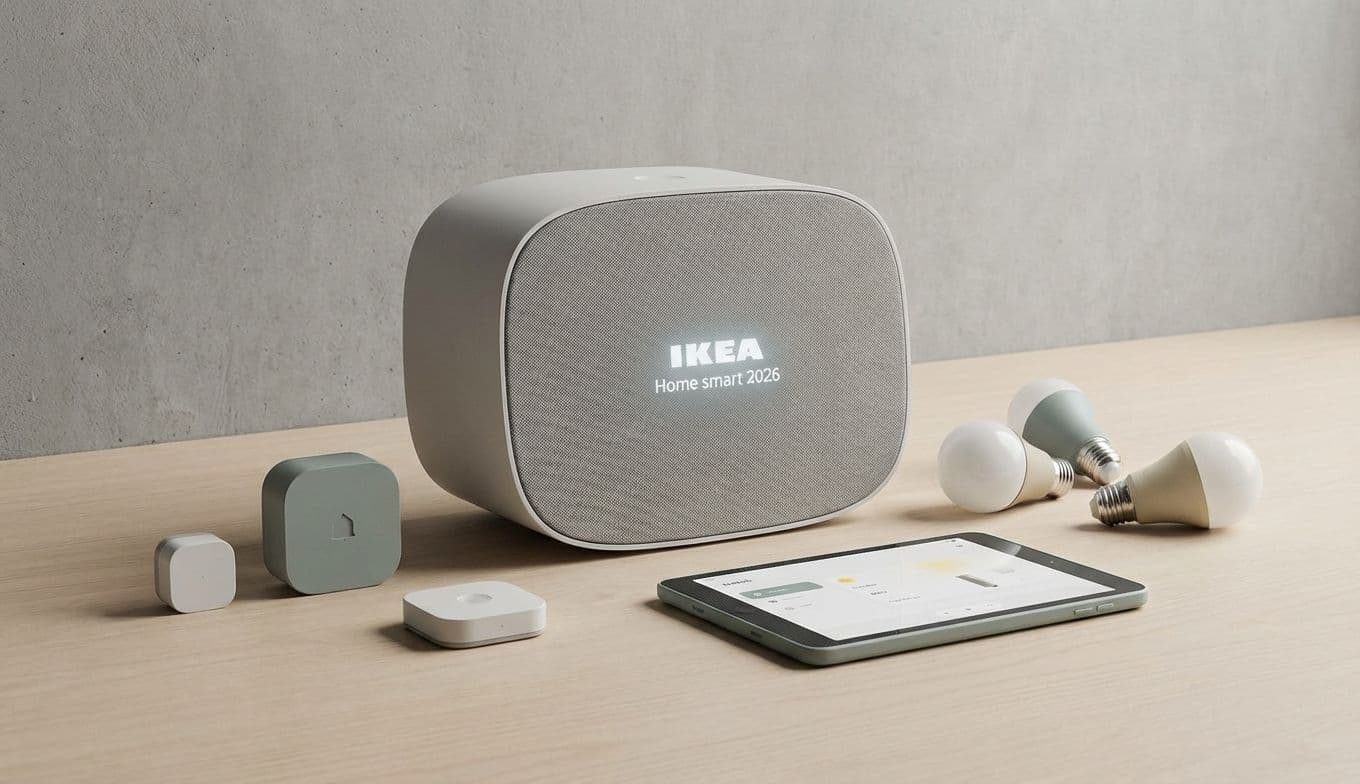
Beyond just lighting, IKEA has expanded into the world of home awareness. They’ve moved past basic plugs into a sophisticated (yet cheap) range of sensors. The PARASOLL door and window sensor is a standout, offering a discrete way to monitor your home’s entry points. Combine that with the VALLHORN motion sensor, and you can have your hallway lights turn on automatically when you stumble toward the kitchen at 2:00 AM.

Then there is the audio side of things. The SYMFONISK series, developed in collaboration with Sonos, continues to be a stroke of genius. The speaker-lamp combos and picture-frame speakers provide a two-in-one solution that’s perfect for small apartments or guest rooms. You aren’t just buying a speaker; you’re buying a piece of furniture that happens to sound great. It’s this kind of integration that makes IKEA’s ecosystem feel more "home" and less "hardware store."
The Brain of the Operation: What You Need to Know
Now, before you rush out and buy a basket full of sensors, we need to talk about the "fine print." As your trusted advisor in the tech space, I have to be clear: you cannot just buy a sensor and expect it to talk to your phone from fifty miles away.
To unlock the true power of this system, you need the DIRIGERA Hub. Think of the DIRIGERA as the conductor of the orchestra. Without it, your smart bulbs are just... bulbs with a remote. The hub is what allows you to use the IKEA Home smart app, set up complex schedules, and control your home when you’re away.
The good news? IKEA has embraced Matter compatibility. For the uninitiated, Matter is the new "universal language" for smart homes. Because IKEA’s new gear supports Matter, it means these budget-friendly devices will play nice with your existing Apple Home, Amazon Alexa, or Google Home setups. This is a huge win for anyone who doesn't want to be locked into a single brand’s walled garden.
The Gimmie Guide: The Ultimate 100 Dollar Starter Kit
If you’re looking for a killer housewarming gift—or you want to treat yourself—here is the perfect starter bundle that delivers maximum "wow" factor for right around $100:
- The DIRIGERA Hub: This is the mandatory starting point for a connected home ($69).
- Two TRÅDFRI Smart Bulbs: One for the bedside lamp, one for the living room ($20).
- One STYRBAR Remote: Because sometimes you just want a physical button to hit ($12).
For roughly $101, you’ve just gifted someone a fully functional, expandable smart home system that works with their voice assistants and grows as they do.
Who Is This For?
IKEA’s 2026 push isn't for the tech elite who need the absolute bleeding edge. It’s for the rest of us.
The Renter: Since almost everything is wireless and uses adhesive or simple screws, it’s a dream for people who can’t rewire their apartments but want modern conveniences. The Practical Gift-Giver: Move over, scented candles. A smart plug or a motion-activated light is a gift that provides genuine utility every single day. The Budget-Conscious: If you’ve felt priced out of the smart home movement, this is your entry point. It’s low-risk and high-reward. The Parent: Adding a VALLHORN motion sensor to a kid’s bathroom or a PARASOLL sensor to a liquor cabinet provides peace of mind without a massive security contract.
The Bottom Line
Is IKEA’s smart home system perfect? Not quite. The app is functional but lacks the deep, granular customization you might find in high-end enthusiast systems. The build quality is solid, but these aren’t "buy it for life" heirloom items.
However, IKEA is doing something no one else is: they are making the smart home approachable. By focusing on the DIRIGERA hub as a bridge to Matter-enabled ecosystems, they’ve ensured that their affordable hardware can live alongside the most expensive tech on the market. In 2026, you don't need a massive budget to live in the future—you just need a trip to the blue-and-yellow warehouse. It’s a smart move by IKEA, and an even smarter buy for you.