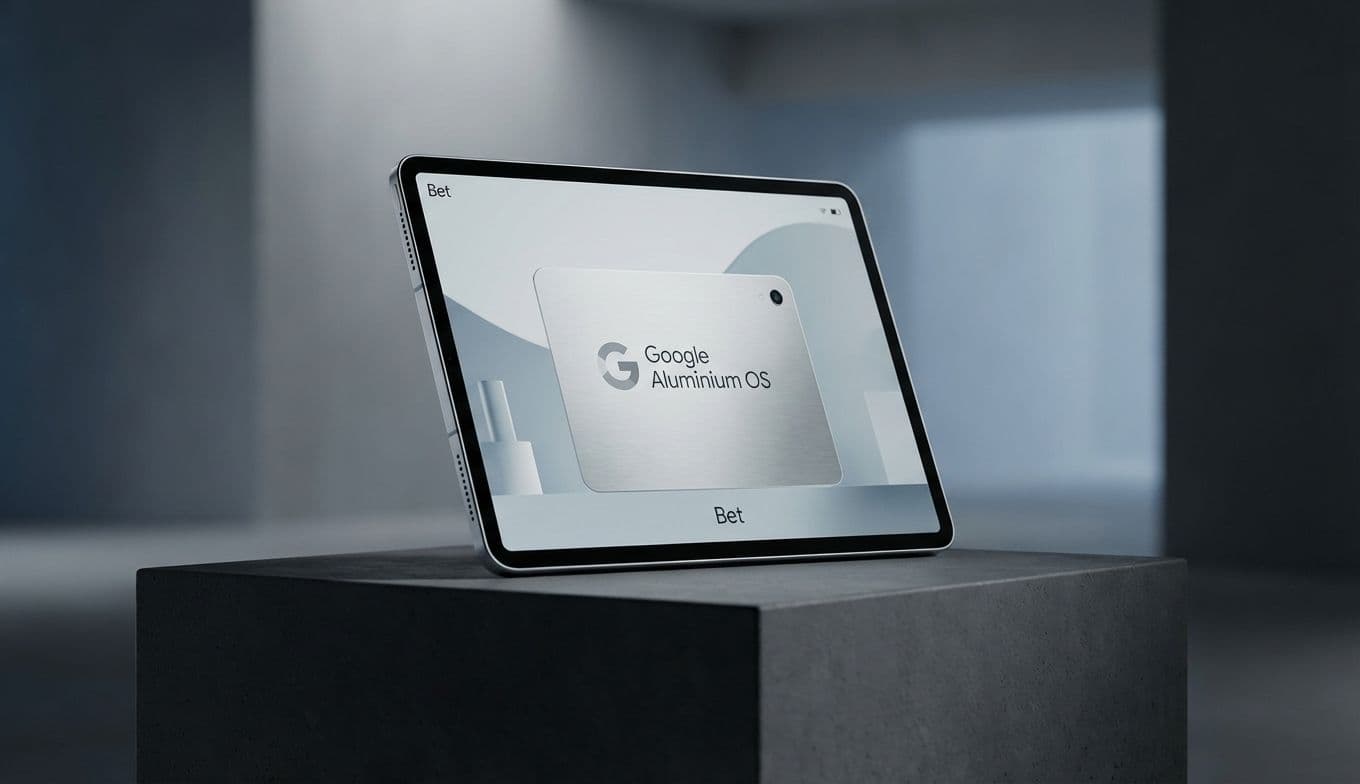
Google Aluminium OS: Why the Android-ChromeOS Merger is a Risky Bet

Team Gimmie

Team Gimmie

2/3/2026

Google Aluminium OS: Why the Android-ChromeOS Merger is a Risky Bet

The Great Google Convergence: Why Aluminium OS is a Gamble Worth Watching

Finally. That was the collective sigh of relief from the tech community when reports surfaced that Google is finally working to bridge the gap between Android and ChromeOS. Internally dubbed Aluminium OS, this project aims to create a unified operating system that could finally give Google a legitimate seat at the desktop table alongside Windows and macOS. With whispers of an Intel-based Ruby laptop and a high-end Sapphire tablet on the horizon, the promise of a device that combines the vast app ecosystem of Android with the desktop-class browser of ChromeOS is undeniably alluring.

As a product reviewer who has tested thousands of devices over the years, I’ve seen this movie before. The dream of a one-size-fits-all operating system is the Holy Grail of Silicon Valley, but the road to achieving it is littered with the carcasses of ambitious failures. While the leaked glimpses of Aluminium OS are exciting, my years behind the testing bench tell me that we should prepare for a launch that is as messy as it is monumental.

The Ghosts of Tech Past

History is a cruel teacher when it comes to unified operating systems. To understand why I’m holding my breath rather than reaching for my wallet, we only have to look back at Google’s own track record. Remember the 2018 Pixel Slate? It was supposed to be the iPad Pro killer, a beautiful piece of hardware running ChromeOS with deep Android integration. Instead, it launched with sluggish performance, buggy software, and a user interface that felt like it was having an identity crisis. Google eventually pulled the plug on its own tablet manufacturing shortly after.

Microsoft provides another cautionary tale with Windows RT. In an attempt to force a mobile-friendly interface onto a desktop platform, they created a hybrid that pleased no one. It couldn't run traditional desktop apps and didn't have enough mobile apps to compete with the iPad. It was a bridge to nowhere.

For Aluminium OS to succeed, Google has to solve the problem that sunk the Pixel Slate and Windows RT: the friction between touch-first mobile apps and cursor-first desktop environments. If your favorite Android app feels like a stretched-out smartphone interface on a 14-inch Ruby laptop, the magic disappears instantly.

The Legal Minefield and the Anti-Trust Cloud

The technical hurdles are only half the battle. Recent court documents surfacing from Google’s ongoing search anti-trust cases suggest that Aluminium OS isn't just a software project; it’s a strategic pivot under intense regulatory scrutiny.

When Google bundles its services together—like putting the Play Store and Chrome at the heart of a new PC operating system—it attracts the attention of global regulators. These legal entanglements could significantly impact how Aluminium OS actually arrives on your desk. We might see a staggered rollout, or worse, a version of the OS that is stripped of key features in certain regions to satisfy anti-trust concerns.

For you, the consumer, this means the Aluminium OS device you read about in a leaked memo might look very different from the one you can actually buy. Regulatory pressure can lead to last-minute software changes, delayed launches, and compatibility issues that make early adoption a risky proposition.

The Gift-Giver’s Strategy: Who Should Wait and Who Should Wade In?

With the hype building, you might be tempted to put a Ruby laptop or a Sapphire tablet at the top of your holiday shopping list. However, gift-giving in the midst of an OS transition requires a nuanced approach. Here is how I’d break it down for different types of recipients:

The Early Adopter and Tech Hobbyist For the person who loves troubleshooting and wants to be the first to see the future, an Aluminium OS device is a thrilling gift. They won’t mind the occasional system crash or the fact that their favorite photo editor doesn't scale correctly yet. For them, the messiness is part of the fun.

The Student and the Productivity Hunter Proceed with extreme caution here. Students need reliability above all else. A mid-semester OS update that breaks a critical research tool or a VPN is a disaster. If you’re buying for a student, stick to the proven paths. A MacBook Air with the M-series chips or a high-end, established Chromebook like the Acer Chromebook Spin 714 remains a much safer bet. These devices offer the stability and battery life required for a long day in the library.

The Non-Techy Parent or Senior For those who just want their computer to work without a fuss, Aluminium OS is a hard pass for at least its first year. Stick to what they know. If they are used to an iPad, get them the latest iPad Air. If they are Windows lifelines, a solid Dell XPS or Microsoft Surface Laptop will provide a frustration-free experience that a brand-new, experimental OS simply cannot guarantee.

What to Watch for on Launch Day

If you do decide to jump in when the first Aluminium devices hit the shelves, there are three specific benchmarks I’ll be looking for in my testing:

  1. Window Management: Can you truly multitask? If Android apps still struggle to snap into place or resize without crashing, the OS isn't ready for prime time.
  2. The Intel Integration: With the Ruby laptop slated for Intel’s Panther Lake architecture, the synergy between the hardware and the unified software needs to be seamless. We need to see desktop-level performance without the device turning into a space heater.
  3. Offline Capability: ChromeOS has always struggled with the perception of being a paperweight without Wi-Fi. Aluminium OS needs to prove it can handle heavy-duty offline tasks as well as a Mac or a PC.

A New Era of Computing

Google’s move toward Aluminium OS represents a fundamental shift in how we think about our devices. We are moving away from the era where we have a phone for fun and a computer for work. The goal is a singular, fluid digital existence where your apps, your files, and your workflow follow you regardless of the form factor.

It is a bold, necessary vision. But as we’ve seen with the Pixel Slate and the failed experiments of the past, vision alone isn't enough. It requires flawless execution and a clear path through a thicket of legal challenges.

My advice? Don't get swept up in the first wave of marketing. Let the reviewers put these devices through the wringer first. Watch how Google handles the initial bugs and how the developers respond to the new platform. Aluminium OS might eventually be the foundation of your next great computer, but for now, it’s a project that deserves our curiosity—and a healthy amount of distance. Wait for the polish to match the promise.

#Android ChromeOS unification#Google Ruby laptop#Sapphire tablet#Intel Panther Lake#Pixel Slate failure