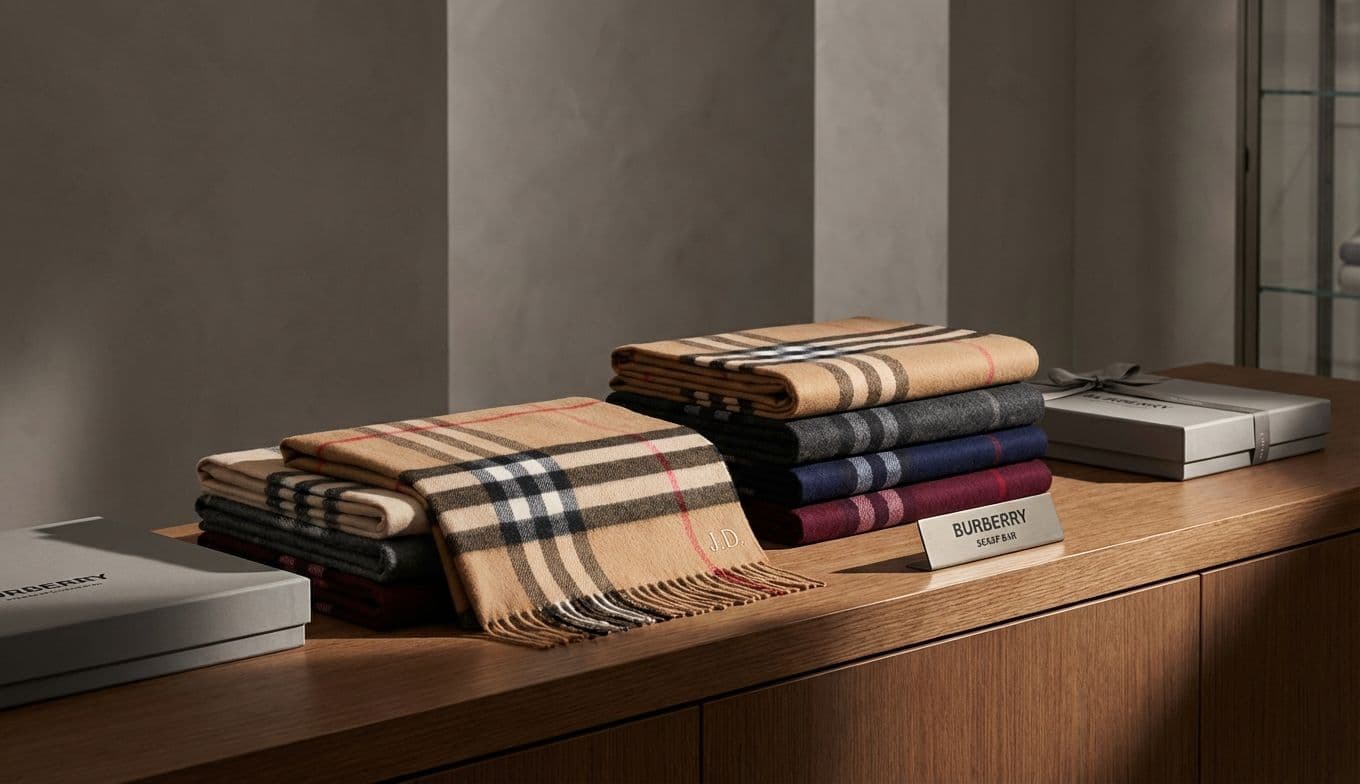
Burberry Scarf Bar: The Art of Experiential Luxury Gifting

Team Gimmie

Team Gimmie

1/25/2026

Burberry Scarf Bar: The Art of Experiential Luxury Gifting

The Art of the Experience: What Burberrys Scarf Bar Teaches Us About Modern Gifting

In the world of product reviews, it is common to see brands chase the latest digital trends with more enthusiasm than actual innovation. It is rare to find a company that truly understands the psychological art of product engagement, particularly in the high-stakes world of gifting. While recent headlines focus on Burberry’s surging sales in the Asia-Pacific region, there is a much deeper story unfolding about how brands can elevate a simple product into a memorable event. By transforming their iconic cashmere accessories into a global Scarf Bar initiative, Burberry isn't just selling fabric; they are offering a masterclass in why the act of purchasing a gift has become just as important as the gift itself.

For the modern gift-giver, this shift is critical. We are moving away from a world of mere transactions and toward a world of curated moments. When you give a gift purchased through a dedicated experience, you aren't just handing over an object. You are giving a story, a touch of global sophistication, and the memory of a thoughtfully designed encounter. Whether you are shopping for a milestone birthday or a corporate thank-you, understanding the value of the purchase journey can significantly amplify the perceived value of whatever is inside the box.

The Scarf Bar as a Retail Destination

The Scarf Bar is not just a shelf; it is a destination. Walk into a Burberry location in Shanghai, Seoul, or Tokyo, and you will find a space meticulously dedicated to a single category. By clearing out the clutter and focusing on the heritage of the scarf, the brand creates a sense of ceremony. This global rollout during the winter season signals a strategic understanding of the modern consumer: people don't just want to buy; they want to choose.

This curated approach solves one of the biggest problems in high-end gifting—decision fatigue. When a brand presents its best work in an organized, celebratory manner, it makes the shopper feel like an expert rather than a confused spectator. The Scarf Bar allows for a sensory exploration of textures, weights, and the iconic check patterns that have defined the brand for decades. It transforms the shop from a retail floor into a gallery where the customer is the curator.

Experiential Gifting Beyond the Ultra-Luxury Tier

While Burberry provides a high-end blueprint, the strategy of experiential gifting is not reserved for those with a four-figure budget. We see this across the retail spectrum. Consider Apple’s Today at Apple sessions, where the purchase of an iPad or Mac is supplemented by free workshops on photography or coding. The gift becomes an invitation to a new skill, not just a piece of hardware.

Similarly, Sephora has mastered this with its Beauty Insider program and in-store makeovers. When you buy a gift card or a specific palette, the recipient often gains access to personalized consultations. Even at a mid-market level, brands like Build-A-Bear or local artisanal workshops understand that the memory of making the item is what sticks. The lesson for all of us is simple: when choosing where to shop, look for the brands that offer a value-add experience. Whether it is expert personalization, a beautiful environment, or a deep-dive into product education, these elements transform a generic purchase into a cherished memory.

Product Picks: Quality Meets the Moment

When we look at the specifics of the Burberry collection, the quality usually justifies the hype. However, navigating the price points is essential for any serious shopper. The cornerstone of the Scarf Bar is the classic cashmere scarf. Made in Scotland at historic mills, these pieces are exceptionally soft and durable. Expect to pay between $550 and $690 for a standard cashmere check scarf. While the price is steep, the longevity of pure cashmere makes it a legacy gift that can last decades if cared for properly.

For those who want the brand’s aesthetic without the full cashmere price tag, look toward their wool-silk blends or lightweight gauze scarves. These typically range from $350 to $480. They offer the same iconic visual appeal and the prestige of the Scarf Bar experience but are more suited for transitional weather or those who prefer a less bulky feel. By focusing exclusively on scarves in these dedicated spaces, Burberry makes it easy to compare these materials side-by-side, ensuring you don't overspend on a weight the recipient won't actually wear.

The Gift-Giver’s Decision Matrix

To make the most of an experiential retail environment, you should go in with a plan. Whether you are at a luxury boutique or a high-end tech store, use these three focal points to guide your selection:

What is the recipient's Personal Style? Are they a traditionalist who loves the classic tan check, or would they prefer a bold, modern colorway? A dedicated space like the Scarf Bar makes it easier to see the full spectrum of options that you might miss in a crowded department store.

What is the Intended Use? Is this for daily warmth in a cold climate, or is it a fashion statement for travel? Cashmere is the gold standard for heat retention, while silk blends are better for style-conscious individuals in warmer regions.

What is your Budget? Be transparent with the sales associate about your range. In a curated environment, the staff is trained to find the best possible version of a product within your limits, ensuring the experience remains pleasant rather than pressured.

Navigating the New Gifting Landscape

Burberry’s success reminds us what to look for in any significant purchase. First, seek out curation. Avoid the chaos of disorganized retailers. Look for places—online or physical—that tell a clear story about their products. Brands with a rich heritage and a transparent manufacturing process add a layer of meaning that a generic brand simply cannot replicate.

Second, consider the sensory experience. For fashion, it is the feel of the fabric and the weight of the drape. For electronics, it is the intuitive design and the unboxing. The more senses a gift engages, the more it resonates. A scarf chosen from a wall of a hundred colors, felt by hand, and wrapped in a signature box carries more emotional weight than one clicked on a low-res webpage and shipped in a plastic bag.

The takeaway is clear: experience is the new luxury. In an era where almost anything can be delivered to our door in twenty-four hours, the things that truly stand out are the ones that come with a story. Burberry’s Scarf Bar is a reminder that gifting is a journey of discovery. When you invest in that journey, even a simple piece of fabric becomes an extraordinary gesture.

#experiential gifting#luxury retail trends#Burberry cashmere scarf price#gift buying guide#retail psychology