Best Smart TVs 2026: LG, Samsung & Roku Buying Guide
Team Gimmie
1/30/2026

The Smart TV Landscape in 2026: Why Refinement Trumps the Spec War
For the last decade, buying a new TV felt like a race to the bottom of a spec sheet. We obsessed over whether a screen had enough nits of peak brightness to rival the sun or if the pixel count was high enough to see the pores on a background actor's face. But as we move through 2026, the conversation has fundamentally shifted. We’ve hit a point of "peak television" where hardware specs are largely plateauing, and the real value now lies in how well a TV handles the messiness of real-world use.
This year isn't about revolutionary new panel types; it’s about the "intelligence" inside the box. We are finally seeing AI-native upscaling that actually works, transforming low-resolution streaming content into something indistinguishable from native 4K. We’re also seeing the widespread adoption of Wi-Fi 7, which is a quiet game-changer for anyone living in an apartment building where signal interference used to turn a 4K stream into a pixelated mess.
If you are looking to upgrade your living room or find the perfect gift, here is how to navigate the 2026 market without falling for the marketing fluff.
The Cinephile’s Choice: LG OLED C-Series
For anyone who considers "movie night" a sacred ritual, the LG C-series remains the gold standard. In 2026, LG has finally solved the one lingering complaint about OLEDs: brightness. While they still aren't as blinding as a high-end LED, the new panels are more than capable of handling a moderately lit living room during a Sunday afternoon game.
The real star here is the Alpha 11 AI processor. In previous years, "AI picture enhancement" usually just meant making things look unnaturally sharp and "soap-opera-y." This year, the processing is much more subtle, specifically targeting near-black shadow detail to ensure you aren't squinting at a dark scene in a thriller.
However, the "smart" experience remains a mixed bag. LG’s webOS has become increasingly aggressive with "sponsored content" on the home screen. The Magic Remote, with its on-screen cursor, continues to be a polarizing piece of tech—some find it intuitive, while others find it as finicky as a laser pointer in the hands of a caffeinated toddler. If you buy this TV, you are buying it for the peerless contrast and the perfect blacks, not the software.

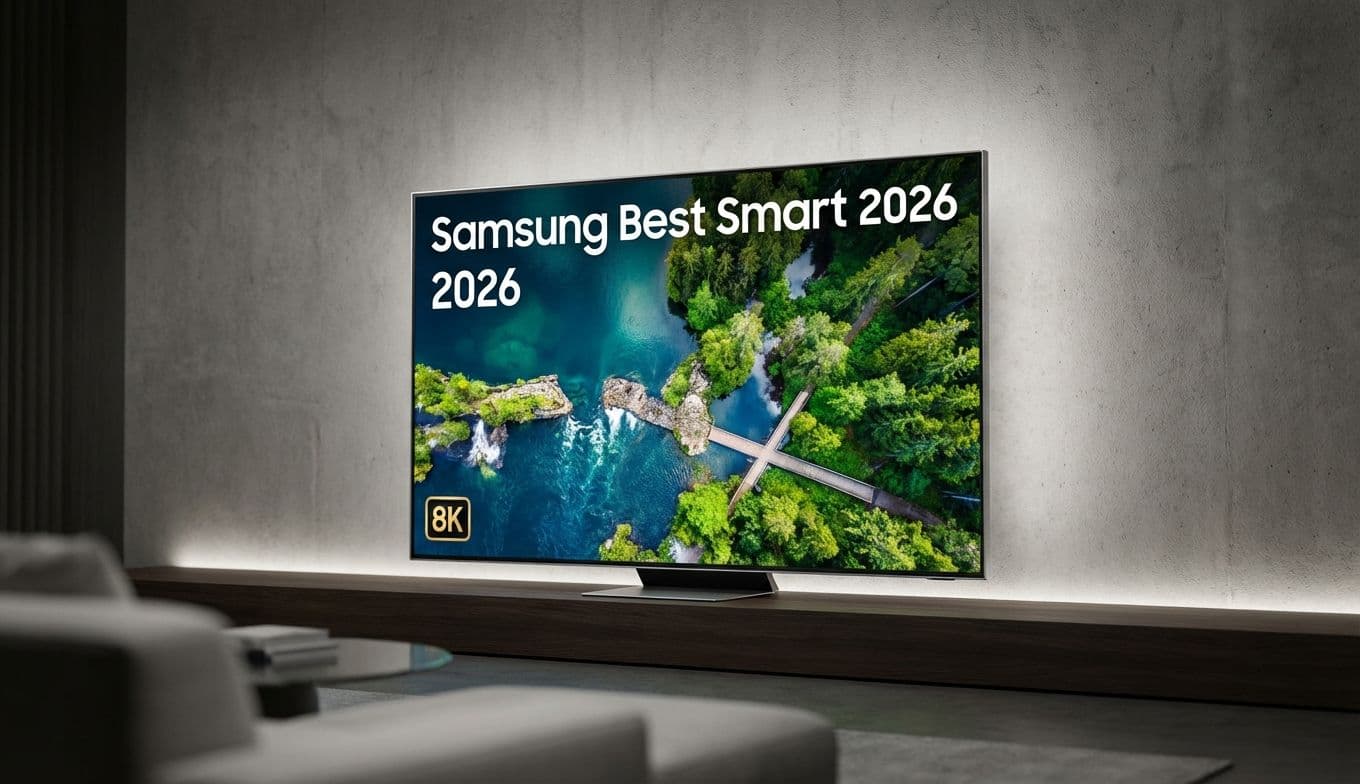
The Bright-Room Powerhouse: Samsung Neo QLED QN90
If your TV sits opposite a large window or you’re primarily a daytime sports viewer, the Samsung Neo QLED is the undisputed king of 2026. Samsung’s Mini-LED technology has reached a point of maturity where "blooming"—that annoying halo of light around white text on a black background—is almost entirely a thing of the past.
Samsung’s 2026 lineup also leads the pack in AI-native upscaling. It is particularly impressive at taking 1080p sports broadcasts and smoothing out the motion without adding artificial artifacts. It’s also a gaming beast, featuring four HDMI 2.1 ports that support 144Hz refresh rates for PC gamers and 120Hz for console players.
The trade-off is Samsung’s continued, stubborn refusal to support Dolby Vision. While HDR10+ is fine, most premium streaming services prioritize Dolby Vision, and movie buffs will feel that omission. Furthermore, the Tizen OS has become increasingly bloated this year, buried under layers of menus that can feel sluggish. My advice? Spend the money on this incredible panel, but plug in a high-end external streaming stick to bypass the built-in interface entirely.
The No-Fuss Gift for Parents: Roku Plus Series
Buying a TV for someone else is a minefield. You want them to have a great picture, but you don't want to become their 24/7 tech support line. This is where the Roku Plus Series shines. It’s the "it just works" option of 2026.
While it lacks the infinite contrast of the LG or the searing brightness of the Samsung, the Roku Plus offers a QLED panel that looks significantly better than its mid-range price tag suggests. But the real selling point is the interface. In an era where every other manufacturer is trying to turn your TV into an ad-delivery platform, Roku’s grid-based layout remains clean, fast, and incredibly easy to navigate.
It’s the perfect gift for the non-tech-savvy. There are no "AI modes" to accidentally toggle and no complicated sub-menus. It’s a reliable, high-quality window into their favorite shows that won't require a phone call to you every time they want to switch from Netflix to cable.
The 2026 Technical Checklist: What Actually Matters
If you’re shopping for yourself, there are three things you need to verify before tapping your card:
-
Wi-Fi 7 Support: If you plan on streaming 4K or 8K content over a wireless connection, Wi-Fi 7 is the new baseline. It offers much better stability in crowded environments and significantly lower latency for cloud gaming.
-
AI-Native Upscaling: Don’t just look at the resolution. Look at the processor name. In 2026, the chip’s ability to "clean up" low-quality signals is more important than the raw pixel count of the panel itself.
-
HDMI 2.1 Capability: Even if you aren't a gamer now, you might be in three years. Ensure the TV has at least two ports capable of 4K/120Hz. Many "budget" 4K TVs still skimp on this, which will make the TV feel obsolete much faster.
The Gifting Strategy: Size vs. Specs
When gifting a TV, remember the Golden Rule of Home Theater: Size almost always beats specs in the eyes of the average viewer. Most people will be more impressed by a 75-inch mid-range TV that fills their wall than a 55-inch high-end OLED that feels "small" for the room.
Also, consider the setup. If you are gifting a TV to someone who isn't tech-savvy, the greatest gift you can give is 30 minutes of your time. Set up their accounts, disable the "motion smoothing" (which makes movies look like daytime soaps), and ensure the Wi-Fi is stable.
Final Verdict for 2026
The "spec wars" might be over, but the era of the truly smart TV has finally arrived. If you want the best possible movie experience, go with the LG OLED. If you have a bright room and a love for sports, the Samsung Neo QLED is your winner. And if you want a reliable, user-friendly experience for yourself or a loved one, the Roku Plus Series is the best value on the market.
Just remember: no matter how much you spend on the screen, the built-in speakers are likely still thin and tinny. If you have any room left in the budget, a decent soundbar will do more for the "cinematic experience" than an extra 500 nits of brightness ever could.